Impact Windows for Florida Homes: What Homeowners Should Know
What separates impact-rated windows and doors from standard ones, and how to think through an upgrade.
Deciding whether to upgrade? Read Are impact windows worth it in Vero Beach?
If you own a home in Vero Beach or anywhere along Florida’s coast, you’ve probably had the impact window conversation — whether during a storm season, an insurance renewal, or a remodel. It’s a bigger decision than it looks, touching everything from how your home performs in a storm to your day-to-day comfort and noise levels. Here’s what actually matters when you’re evaluating impact windows and doors.
What Makes a Window “Impact”
Impact-rated windows and doors are built with laminated glass — two panes bonded around an interlayer — set into a reinforced frame designed to stay intact under wind-borne debris impact and sustained wind pressure. The glass can crack under significant impact, but the laminated construction is designed to keep it from creating an opening, which is the real danger in a storm: once wind gets inside a structure through a broken window, pressure builds rapidly and can compromise the roof and walls.
Why This Matters More in Certain Areas
Homes in Florida’s High-Velocity Hurricane Zones and coastal wind-borne debris regions face stricter building code requirements for window and door protection than homes further inland. Depending on where your property sits and when it was built, you may be required to have impact protection — either impact-rated glass or approved shutters — on new construction or window replacements. This is worth confirming with your contractor before you start pricing options, since it affects both your product choice and your permit scope.
Beyond Storm Protection: Everyday Benefits
Impact windows aren’t just a hurricane feature. The laminated glass construction also cuts down significantly on outside noise — a real benefit if you’re near a busy road or under a flight path. Many impact-rated products also block a large share of UV transmission, which helps protect flooring, furniture and artwork from sun fading, and they typically perform better for energy efficiency than older single-pane or non-impact double-pane windows, since the frames and seals are built to a tighter standard.
What Drives the Decision to Upgrade
A few factors tend to push homeowners toward replacing windows sooner rather than later: aging or leaking frames, single-pane glass that’s inefficient and noisy, an insurance policy that offers meaningful premium credits for impact protection, or a broader remodel where windows are already being touched. If you’re only replacing a few windows versus doing a whole-house upgrade, it’s worth discussing sequencing with your contractor — matching sightlines and frame colors across old and new windows can affect how consistent your home looks from the outside.
- Confirm whether your property falls in a wind-borne debris region requiring impact protection
- Ask what wind pressure rating your specific home’s window openings require
- Compare impact glass against shutters if code allows either as compliance options
- Check whether your homeowner’s insurance offers a premium credit for impact-rated products
- Plan installation timing around your insurance renewal date if pursuing a credit
Thinking about impact windows for your Vero Beach home? GRV General Contractors offers free on-site estimates — call 772-766-3388 or request an estimate online.
What to Expect From the Process
Window and door replacement in this area requires a permit, and inspections are part of the process to confirm the installed products meet the required rating for your home’s wind zone. A contractor who pulls permits, coordinates inspections, and handles product certification paperwork directly saves you from having to manage that process yourself — and gives you documentation you’ll want on hand for insurance purposes.
Frames, Sizing and Existing Openings
Replacing windows isn’t always a straight swap. Impact-rated frames are often thicker and heavier than standard frames, which can slightly change the visible glass area or require adjustments to the surrounding stucco or trim. Homes with older or non-standard window openings may need additional prep work to accept new impact-rated units properly. A contractor who measures and evaluates each opening individually — rather than assuming a one-size approach — will give you a far more accurate estimate and a cleaner final install.
Whole-House vs. Phased Replacement
Not every homeowner replaces every window at once, and that’s a reasonable way to approach the project if budget is a factor. Phasing by priority — starting with the most exposed elevations, or the largest and most vulnerable openings like sliding glass doors — lets you spread the investment over time while still addressing the highest-risk areas first. If you plan to phase the project, ask your contractor to document product specs from the first phase so later phases match in style and performance rating.
Doors Deserve the Same Attention as Windows
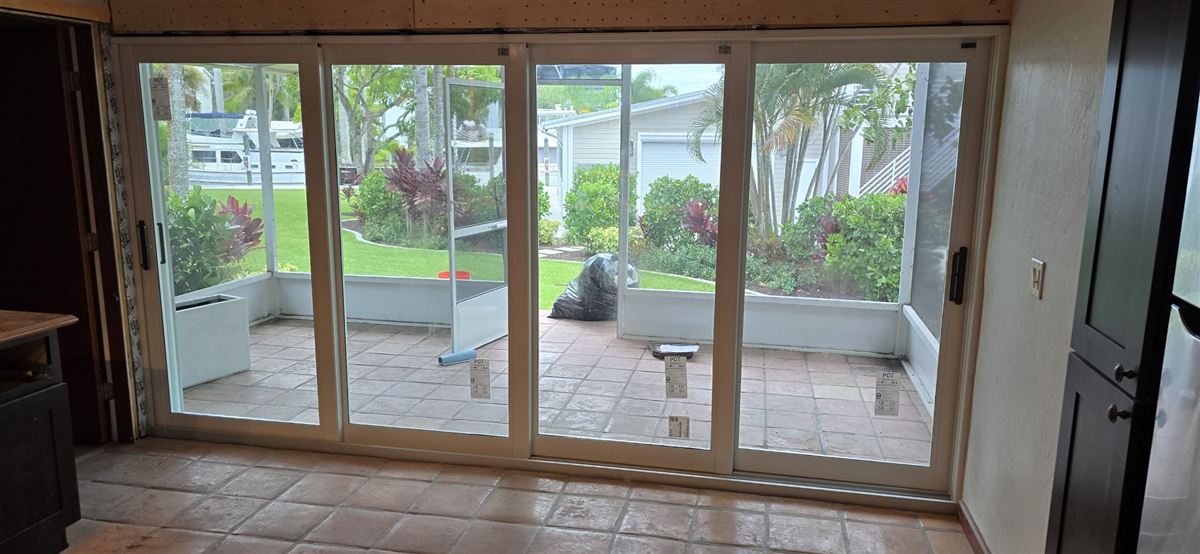
It’s common for homeowners to focus entirely on windows and treat entry doors, sliders and garage doors as an afterthought, but these are often the largest and most vulnerable openings in a home during a storm. Impact-rated sliding glass doors and entry doors should be evaluated with the same scrutiny as window openings, particularly on elevations facing prevailing wind directions.
Impact windows are one of the few home upgrades that pay off in more ways than one — protection, comfort, and potentially lower insurance costs. Taking the time to understand your specific requirements before you start shopping makes the whole process go smoother.
Ready to Start Your Project?
Tell us what you’re planning — new build, remodel, addition, windows or an outdoor space — and get a free on-site estimate.